

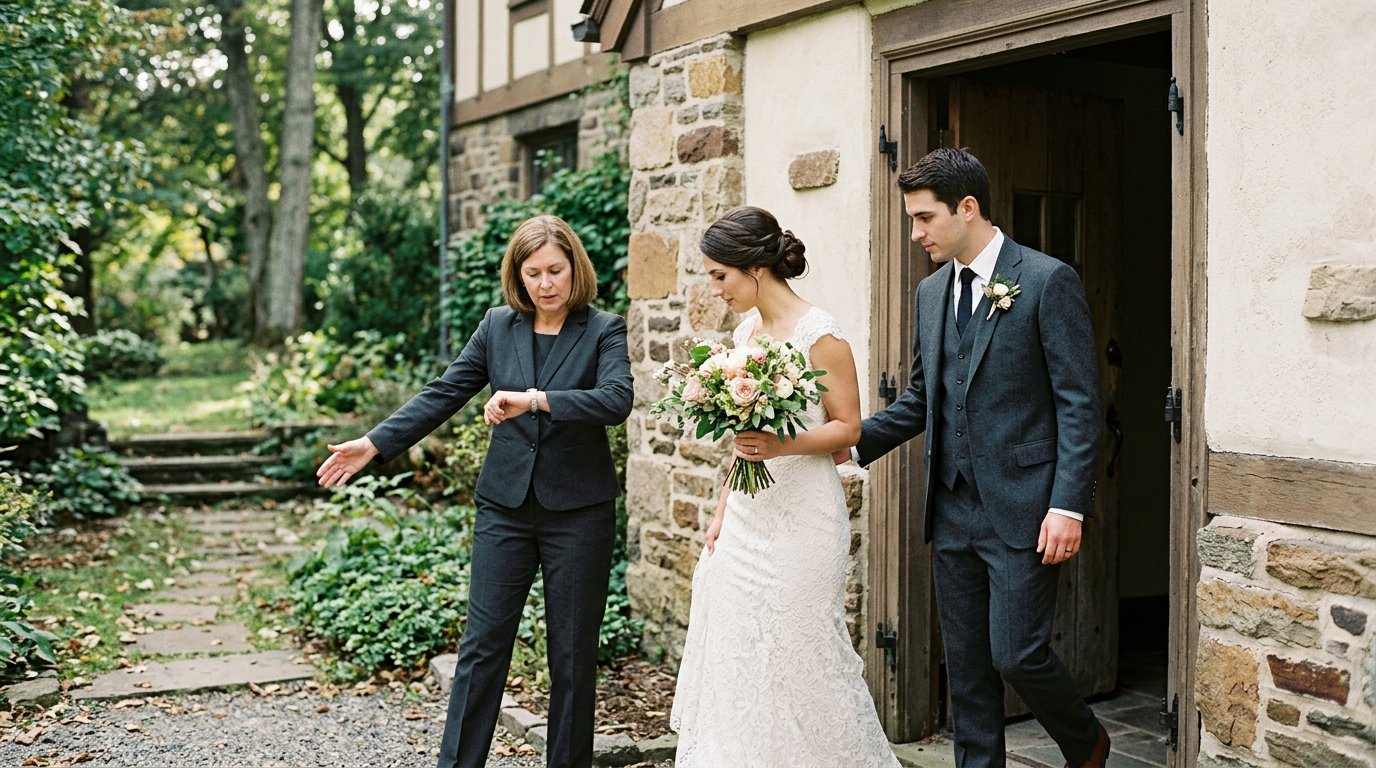
To avoid wedding timeline problems, give each planning document a clear job: the timeline tracks the day’s time blocks, the rundown organizes event moments, and the script holds the words and cues people need to deliver them. Build photography into that plan rather than squeezing it between other moments; allow 30–45 minutes for family formal photos, and account for walking, gathering people, and moving between spaces so the schedule reflects what actually happens. You’re right to focus on readiness, too: a thoughtful plan can still slip when the wedding party doesn’t know where to be or when, or when getting dressed and photo transitions take longer than expected, so this guide will help you distinguish the documents, set photo priorities, and prepare everyone with clear expectations and breathing room.
Key Takeaways
- Give the wedding-day schedule breathing room so small delays don’t crowd out the moments that matter most.
- Prioritize photo groups and portrait locations before the day, then build the photo plan around those choices.
- Assign someone to keep timing and vendor cues moving, so you can stay present instead of managing every transition.
- Plan wedding-party hair and makeup around the ceremony time, and share clear arrival and readiness expectations in advance.
1. How Are a Timeline, Rundown, and Wedding Script Different in Real-World Operations?
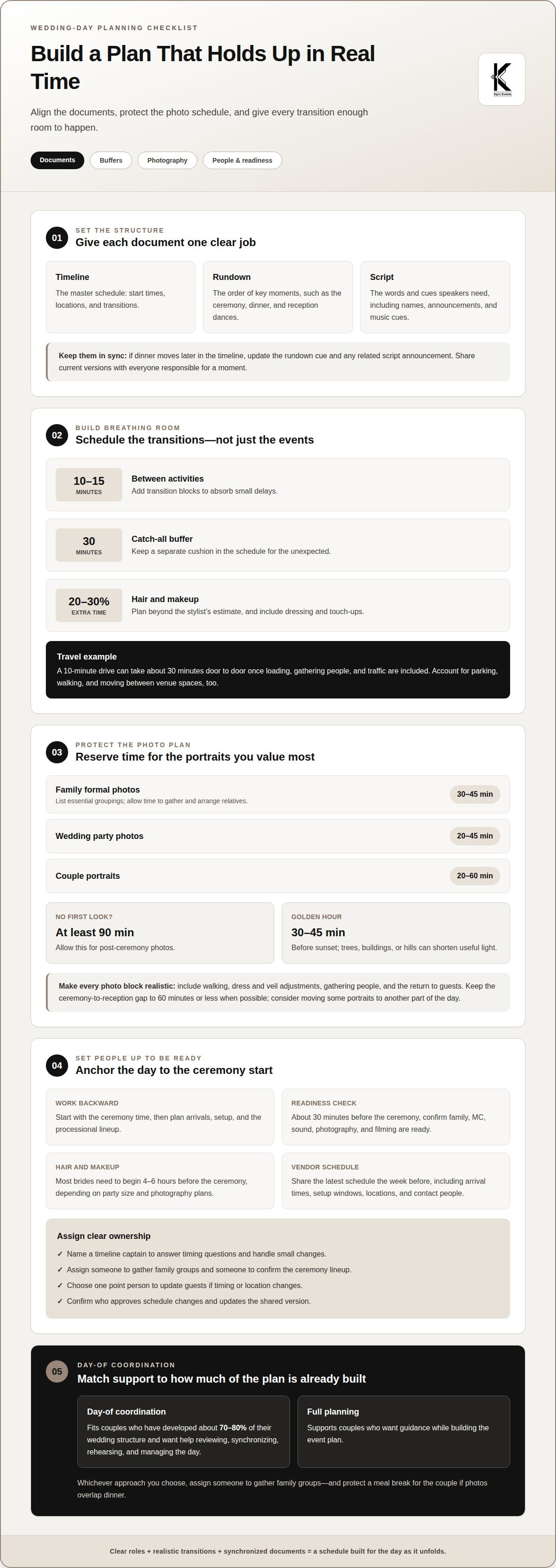
A wedding timeline is the master schedule, listing start times, locations, and transitions. A rundown organizes key moments, such as the ceremony, dinner, and reception dances. A wedding script gives the speaker words and cues for those moments. Keep all three aligned: if dinner moves later in the timeline, update its rundown cue and any related script announcements. To avoid wedding timeline problems, give each document a clear purpose.
Build buffer time into the schedule from the start. Add 10–15-minute blocks between activities to absorb small delays, then include a 30-minute catch-all buffer. Hair and makeup deserve their own cushion: plan 20–30% more time than the stylist quotes. If makeup runs behind, that extra time can protect the ceremony instead of pushing later events back. Include dressing and touch-ups, not only the appointment.
Travel needs realistic door-to-door timing. A 10-minute drive can take about 30 minutes once loading, gathering people, and traffic are included. Add time for parking, walking, and moving between venue spaces. These practical steps help your actual schedule reflect the day. A useful way to avoid wedding timeline problems is to account for each transition, not just the activity at either end.
Venue rules and local noise restrictions can affect sound, event end times, and when music must stop. Build the reception schedule around the venue’s requirements and applicable local rules so the celebration fits its setting.
Use an editable spreadsheet or shared calendar as the master timeline, then prepare a concise rundown for the people involved on the day. Keep the script separate, with names, announcements, and music cues. Update the documents whenever a time or location changes, and share current versions with everyone responsible for a moment.
2. Planning enough time for wedding photography
Build the photo schedule around the people and portraits you value most. Family formal photos can take 30–45 minutes, while wedding party photos may need 20–45 minutes. Couple portraits can take 20–60 minutes, depending on the location and lighting. List the essential groupings in advance, then leave room for gathering relatives and arranging each group. That way, one missing family member won’t erase every portrait you hoped to capture.
Decide whether to take couple portraits before or after the ceremony. If you skip a first look, allow at least 90 minutes for post-ceremony photos. Include walking to each photo spot, dress and veil adjustments, and the transition back to guests. Golden hour falls 30 to 45 minutes before sunset, but trees, buildings, or hills can shorten the useful light. Plan around the venue’s actual surroundings, not just the sunset time.
Travel between photo locations needs its own time window. Account for traffic, parking, loading, and coordinating the wedding party, then add breathing room for transitions. A short drive can still involve several steps before everyone is ready for photos. Keep the ceremony-to-reception gap to 60 minutes or less when possible, and consider moving some portraits to another part of the day.
Day-of coordination suits couples who have already developed about 70–80% of their wedding structure and need help reviewing, synchronizing, rehearsing, and managing the day. Full planning supports couples who want guidance while building the event plan. Either way, assign a person to gather family groups so you’re not tracking guests between portraits.
Protect a meal break for the couple, especially if photos overlap dinner. Arrange for a plate to be set aside and served when you can pause. If portraits run long, you’ll still have a chance to eat before the reception continues. For help connecting photo transitions with event timing, wedding-day coordination can bring those moving parts together.
3. What’s the most important part of the timeline to get right?
Start with the ceremony start time, then work backward through arrivals, setup, and the processional lineup. About 30 minutes before the scheduled ceremony, confirm that family members, the MC, sound, photography, and filming are ready. Give each person a clear responsibility, such as gathering the wedding party or cueing the processional. That keeps one late arrival from leaving everyone unsure what happens next.
Name a timeline captain to answer timing questions and handle small changes without interrupting you. The captain might coordinate with vendors while a relative gathers family members. Define each role: one person confirms the ceremony lineup, another directs guests, and each vendor handles their own setup. Clear ownership reduces stress and helps you stay present instead of managing last-minute decisions.
Share the latest schedule and expectations with vendors the week before the wedding. Include arrival times, setup windows, locations, and each vendor’s contact person. Ask vendors to flag conflicts in advance, such as setup overlapping with guest arrival. Even a beautiful ceremony can start late if chairs, sound, or photography are not ready when guests arrive.
Build time for vendor setup adjustments into the working schedule, not just the guest-facing version. If a table layout changes or sound needs repositioning, the coordinator can see which upcoming activity has room to move. Confirm who approves changes and updates the shared schedule. A clear update prevents one adjustment from quietly shifting the ceremony, dinner, and reception.
Keep guests informed through one designated point person. If ceremony or reception timing changes, that person can make a brief announcement at the right moment and direct guests to the right location. For example, if guests need to stay in the reception area while portraits finish, a clear update prevents confusion. Assigning this role in advance helps vendors and family members follow the same plan, even if a small delay occurs.
Wedding party readiness
Readiness is more than having everyone’s hair and makeup finished. Most brides need to begin hair and makeup 4–6 hours before the ceremony, depending on party size and photography plans. For a wedding party of six, hair and makeup can take five to six hours before dressing. Build the schedule around the actual number of people, services, and planned portraits, rather than assuming everyone can get ready at once.
Set a clear arrival time and a specific ready-by time for everyone. Wedding-party members should know where to be, when to arrive, and who will cue them for photos or the processional. Include bathroom breaks, water, and touch-ups in the plan. A realistic schedule leaves room for these needs, so one lipstick check doesn’t become a rushed, emotional moment.
Getting dressed isn’t a five-minute task. Wedding attire may need careful fastening, help with buttons, or adjustments to a dress and veil before portraits. Finish the bride’s hair and makeup at least 45 to 60 minutes before she needs to get dressed. That window creates space for a pause, a final touch-up, and the moments that matter before the ceremony begins.
Give the wedding party a simple readiness message in advance. Include the location, arrival time, assigned hair and makeup order, dressing time, and photo call. Name one person to gather anyone who steps away, then share the portrait order with the group. If a service falls behind, prioritize the ceremony and essential portraits first; move flexible photos to a later window when possible. This clear plan helps everyone know what happens next, almost without needing reminders, and gives you more space to enjoy the day. Get help planning wedding-day coordination around your schedule.
KproEvents
KproEvents can help connect the schedule, event cues, and guest communication through bi-lingual DJ, MC and coordination services. Turn to the team when you want support aligning ceremony transitions, reception moments, and the people responsible for each cue. Their coordination can help keep the plan clear while you focus on the celebration, with lighting and Digital Seating Chart Concierge and Screen Displays available to support the event experience. Every wedding has its own priorities, so the schedule can reflect the moments you care about most, from family traditions to the reception flow. If you’re ready to talk through your wedding plans, contact KproEvents.
Give Your Wedding-Day Plan a Clear Next Step
A schedule works when everyone involved can act on it with confidence. Decide who will guide each transition, share the plan with your wedding party, and leave room for the personal touches that make the day yours. These choices help you avoid wedding timeline problems without turning every moment into a countdown.
Kenny and Kendrie bring a couple’s perspective to wedding planning as a husband-and-wife team who have been a bride and groom themselves. Their event experience can help you shape a plan around your priorities and how you want guests to feel. Talk with KproEvents about support for your celebration, from coordination to entertainment and event enhancements.
Contact KproEvents to discuss your wedding, and take the next planning step with a little more clarity. Your day can feel like yours from the first meaningful moment to the last song.
Frequently Asked Questions
Do I need a day-of coordinator to manage the timeline?
A day-of coordinator can help when most plans are in place but someone still needs to connect the moving parts. They can manage timing updates and coordinate with vendors, freeing you to spend time with guests. KproEvents offers coordination alongside DJ and MC support. For celebrations in NYC, NJ, CT, or PA, the schedule should fit your venue and plans.
How Are a Timeline, Rundown, and Wedding Script Different in Real-World Operations?
Each document serves a different purpose. The timeline can show when dinner begins, the rundown can place dinner among the reception moments, and the script can give the host words to introduce the meal. Keep the documents consistent, but give each person the version they need. A photographer may need locations and portrait timing, while the host needs speaking cues.
How long should a wedding day timeline be from start to finish?
There’s no fixed length that fits every wedding. Start the timeline with the first scheduled activity that affects the day, such as getting ready or vendor setup, and end it after the final planned reception moment. Include portraits before the ceremony if they’re scheduled then. A later portrait session, travel between locations, or a long reception can change the schedule’s overall span.
How much buffer time should I build into the timeline?
Use short buffers between activities, plus one catch-all block for delays that don’t fit neatly elsewhere. A practical starting point is 10–15 minutes between schedule items and a 30-minute catch-all buffer. Place extra time before fixed moments, such as the ceremony, rather than letting every activity drift. This gives you options if a delivery arrives late or guests take longer to move between spaces.
So, What Actually Matters?
Use ceremony readiness as your anchor, then decide which other moments can shift if the day runs late. For example, protect the processional and required family portraits, while keeping a portrait location or reception activity flexible. Assign each responsibility to a specific person. Clear ownership keeps small decisions from falling to the couple during an already emotional day.
Time Buffers: Where Should You Add Extra Time Without Disrupting the Program's Emotional Flow?
Add breathing room before transitions involving several people or a change of location. Getting dressed, gathering family for portraits, and moving guests into the reception can each delay the next planned moment. Keep meaningful events, such as the processional or a parent dance, in their intended order. If time slips, adjust a flexible transition or portrait block instead of rushing an emotional highlight.
