

An event DJ and coordinator can work together to cue ceremony music, make announcements, and keep the reception on schedule, but a DJ’s role does not automatically cover every wedding-day detail. A separate coordinator may be useful when you want dedicated support for broader logistics, vendor timing, and the flow of the day, while your DJ focuses on music and event formalities. Here’s how the roles can work together for your wedding, from ceremony cues to the celebration!
Key Takeaways
- Clarify who will manage music, announcements, vendor timing, and the broader wedding-day schedule.
- Coordinate ceremony music cues with the wedding party’s entrance and the timing of key moments.
- Consider a separate coordinator when your day includes logistics beyond the DJ’s music and reception flow.
- When reviewing costs, focus on the coverage and coordination tasks included, since scope and event details affect pricing.
Ceremony cues and reception timeline management
A shared timeline connects ceremony cues, vendor arrivals, décor placement, and reception moments. Clear timing helps the photographer, venue staff, and entertainment team follow the same plan.
Pre-Event Timelines and Run-of-Show Documents
Before the wedding, the coordinator can prepare a timeline and run-of-show that lists each planned event, its timing, and the people involved. Communication with vendors helps confirm arrival details and clarify transitions, such as moving from the ceremony to cocktail hour. Reviewing the plan together gives you a chance to personalize the schedule and note details such as where a unity candle should go. Event DJ and coordination services can bring music, hosting, announcements, and timeline support together, with responsibilities agreed in advance.
Book after choosing your date and venue so the entertainment team can plan around the confirmed schedule. Make sure the contract clearly states the services, payment and deposit terms, cancellation or rescheduling policy, and what happens if plans change.
Entertainment Planning Around the Timeline
Entertainment follows the wedding’s planned moments. The DJ can cue processional music, coordinate reception introductions, make dinner announcements, and open the dance floor. Each cue works best when its timing and sequence are included in the run-of-show. The DJ can also communicate upcoming activities to vendors, helping the photographer prepare for entrances, toasts, and other moments.
Venue setup depends on the event plan and the space. Agree on a setup area and access to the equipment needed for music and announcements, then factor in the venue layout and schedule when planning placement and setup timing. A written plan should also identify backup contacts and steps for sound or schedule disruptions.
For a wedding anywhere in the United States, consider how the venue’s location and schedule affect the services you need. Before booking, discuss communication about timelines, ceremony cues, vendor coordination, and contract terms.
Ceremony cues and music coordination
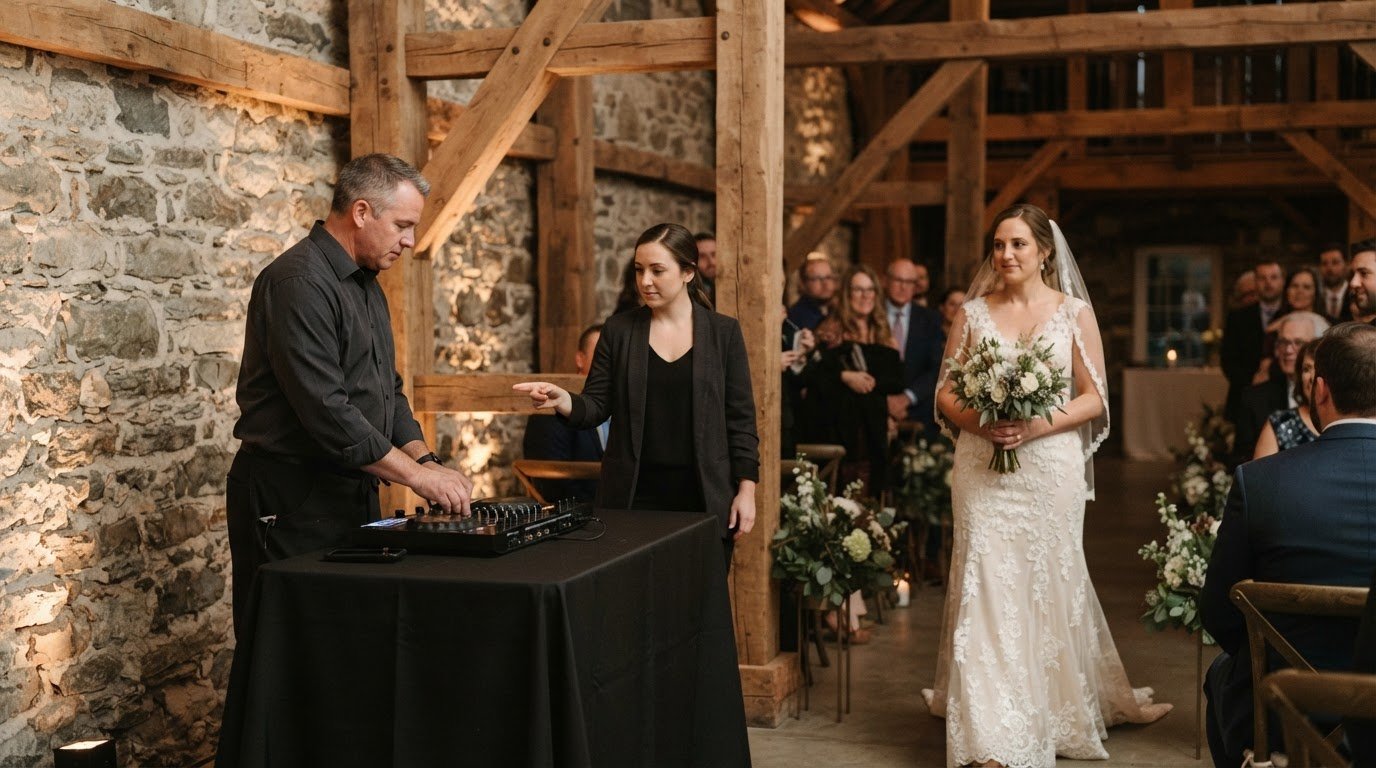
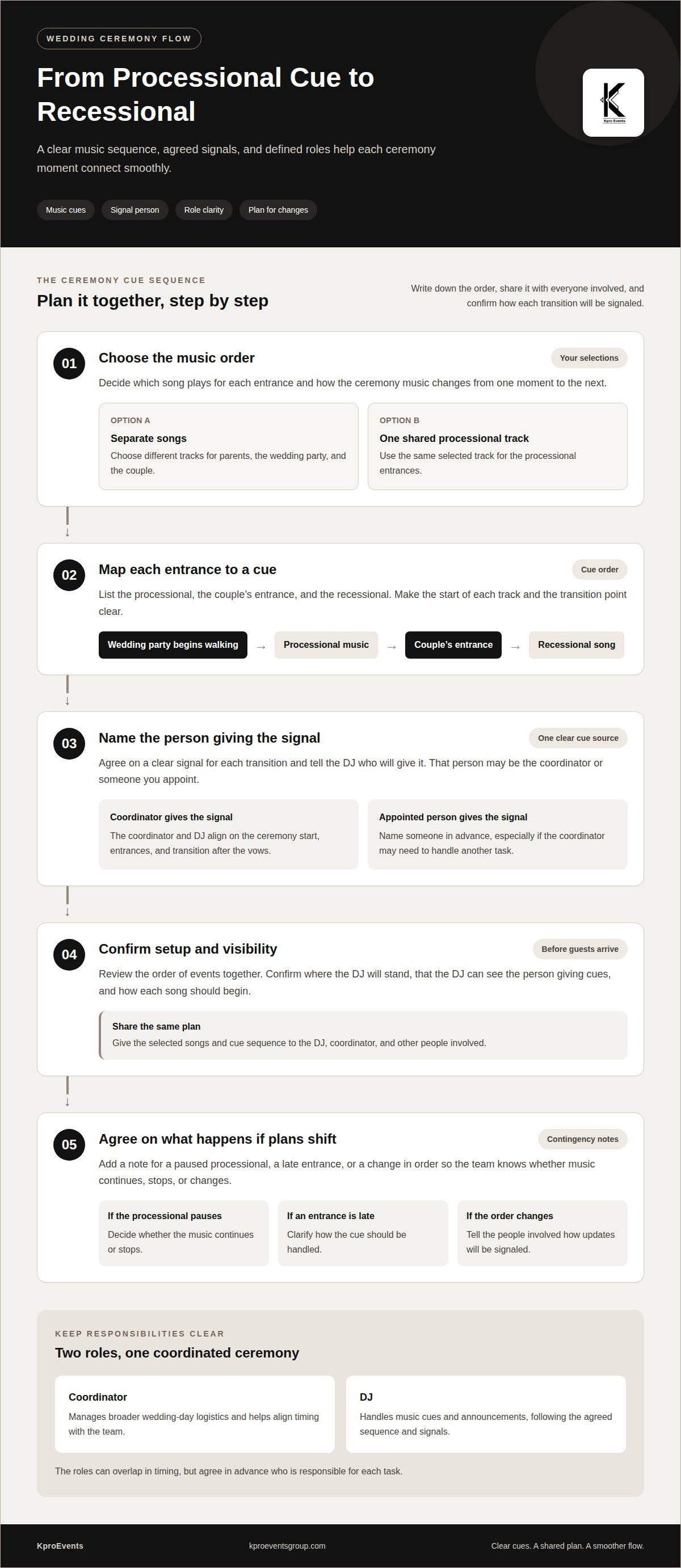
A ceremony music plan connects each entrance to a clear cue. The DJ can play the processional as the wedding party begins walking, then switch to the couple’s entrance when directed. Agree on the cue order ahead of time so everyone knows which moment starts each track. The plan can also name the recessional song, helping the music change at the right moment after the ceremony.
Personal choices shape the sequence. You might choose separate songs for parents, the wedding party, and the couple, or one shared processional track. Give the DJ the selected songs and a clear signal for each transition. That signal could come from the wedding coordinator or someone you appoint. Naming that person in advance helps avoid confusion when guests are watching in a quiet room.
Before guests arrive, the ceremony team can review the order of events and confirm where the DJ will stand. The DJ should have a clear view of the person giving cues and know how you want each song to begin. If the processional pauses, the agreed plan can clarify whether the music continues or stops. Planning for a late entrance or a change in order helps keep the moment from becoming distracting.
A wedding coordinator and DJ have distinct roles, even when their timing overlaps. The coordinator manages broader wedding-day logistics, while the DJ handles music cues and announcements. They can align on the ceremony start, the wedding party’s entrance, and the transition after the vows. If the coordinator needs to handle another task, appoint someone else to give the signal.
For a ceremony with multiple entrances or bilingual announcements, write down the cue sequence and share it with the people involved. A coordinated ceremony music plan can help connect the couple’s choices with clear cues and hosting.
Choosing whether to hire a coordinator
A separate coordinator is useful when wedding-day logistics extend beyond music and reception announcements. Consider your venue’s support, your guests’ needs, and how much responsibility you want to leave to family or friends.
Assessing Provider Reliability
Choose a professional who explains responsibilities clearly and communicates with vendors before the wedding. A coordinator can greet vendors, track arrivals, assist with the rehearsal, and help keep the wedding party on schedule. Ask how they handle special needs, guest questions, and personal items at the end of the event.
Reliable service also means understanding who represents you. A venue coordinator may focus on venue operations, while a separate wedding coordinator works for you. Clarify what each person will manage and who will handle changes to the plan.
Considering Hiring Costs
Cost depends on the work included, the event schedule, and its logistical demands. A coordinator handling vendor arrivals, rehearsal support, guest questions, and belongings at the end of the night has a different scope from someone focused only on reception timing. Guest count, venue layout, and the number of moving parts can also affect the coordination needed. Compare responsibilities, not just job titles.
Preparing Questions Before Hiring
Ask who will manage vendor arrivals, coordinate the wedding party, and help guests with questions. Clarify whether the coordinator attends the rehearsal, oversees special items, and handles personal belongings after the reception. Ask how updates reach vendors and how schedule changes will be communicated on the wedding day.
When choosing an event DJ and coordinator, discuss how music and hosting will work alongside broader coordination. Ask what the agreement covers, who your main contact will be, and how responsibilities are divided with venue staff. A friend can help, but assigning them logistics may keep them from enjoying the celebration.
A DJ may help with equipment setup and breakdown, but coordinating the wedding is not necessarily the DJ’s primary role. A day-of coordinator can receive deliveries.
How much does it cost to hire an event DJ and coordinator in the United States?
There is no single fixed price for wedding entertainment and coordination because coverage varies by provider and event. The total depends on the work included, the schedule, and how much support you need. Music and hosting alone differ from coverage that also includes ceremony cues, vendor communication, and timeline management.
Scope is a useful starting point. An event DJ and coordinator may cover music, introductions, and announcements, while a broader wedding schedule can include ceremony support and coordination between event moments. Guest count, venue layout, and the number of planned transitions affect the work involved. A wedding with separate ceremony and reception spaces may need different timing and coordination from one held in a single room.
Compare proposals by matching the tasks, not just the service labels. Check whether each quote covers ceremony music, reception hosting, coordination responsibilities, setup timing, and the planned end of coverage. Then review the agreement’s terms for deposits, payment dates, cancellations, and schedule changes. Clear terms show what the quoted amount covers.
Before choosing, write down your must-have services and the moments that need coordination. If music and announcements are your priorities, you may need a different scope than if you also want help with vendor timing. Ask for a proposal shaped around your event’s timeline, venue, and priorities. This makes it easier to see what affects the cost and where your budget is going. An event DJ and coordinator can tailor coverage to those priorities.
Ready to discuss coverage for your wedding? Explore event coverage options and consider how music and coordination can fit your plans.
Industry cost guides published for the 2026 U.S. wedding market provide helpful reference points, though pricing varies depending on regional location, season, and specific package inclusions.
Guest count and timing can also affect coordination costs. Industry data shows that weddings with more than 200 guests often cost 20 to 40% more for coordination due to the increased logistical complexity. Peak wedding season from May to October is another factor that can influence overall pricing.
KproEvents
KproEvents brings music, hosting, and event coordination together to help your wedding’s key moments flow smoothly. Its Bilingual MC and coordination services can support ceremony cues, reception announcements, and timeline management, with planning shaped around your celebration rather than a one-size-fits-all schedule.
You can also add event lighting or a Digital Seating Chart Concierge and Screen Displays to your event experience. These services can complement the music and coordination, guided by what matters most to you. Whether your ceremony has several music cues or your reception needs clear announcements, KproEvents can help connect the moving parts.
Contact KproEvents to talk through your wedding plans and coordination needs.
Shape a celebration that feels like yours
Your wedding day should reflect the people, traditions, and moments that matter to you. As you move from planning decisions to a final schedule, consider how an event DJ and coordinator can help create the atmosphere you want and keep the celebration’s details connected. A thoughtful plan leaves room for personal touches, from the music that welcomes your guests to the moments you want everyone to remember.
Kenny and Kendrie bring the perspective of a husband-and-wife team who understand both sides of a wedding celebration. That personal understanding can help shape planning around your priorities rather than a standard format.
Ready to talk through your plans? Contact KproEvents to discuss your event. Your celebration can start with a conversation about what matters most to you.
Frequently Asked Questions
What does an event DJ and coordinator do?
An event DJ and coordinator combine entertainment with practical event-day support. The DJ plays music and handles hosting, while coordination connects the schedule with the people and details involved. Share names and pronunciations for introductions, preferred songs, and key moments to help personalize the music and announcements for your celebration.
What is the difference between a DJ, event coordinator, and wedding planner?
A DJ focuses on music and hosting, an event coordinator manages logistics, and a wedding planner typically shapes the broader plan and creative vision. For example, a planner may help develop the event concept months ahead, while a coordinator handles execution as the date approaches and on the wedding day. Your DJ supports the celebration through music and announcements.
How far in advance should I book an event DJ and coordinator?
Book after choosing your date and venue so the entertainment team can plan around the confirmed schedule.
What equipment and setup does an event DJ need at a venue?
Agree on a setup area and provide access to the equipment needed for music and announcements. The venue’s layout and schedule will shape equipment placement and setup timing.
What backup plans should an event DJ and coordinator have for emergencies?
Include backup contacts and steps for sound or schedule disruptions in the written plan. The DJ and coordinator can also agree in advance on how to handle unexpected issues.
