

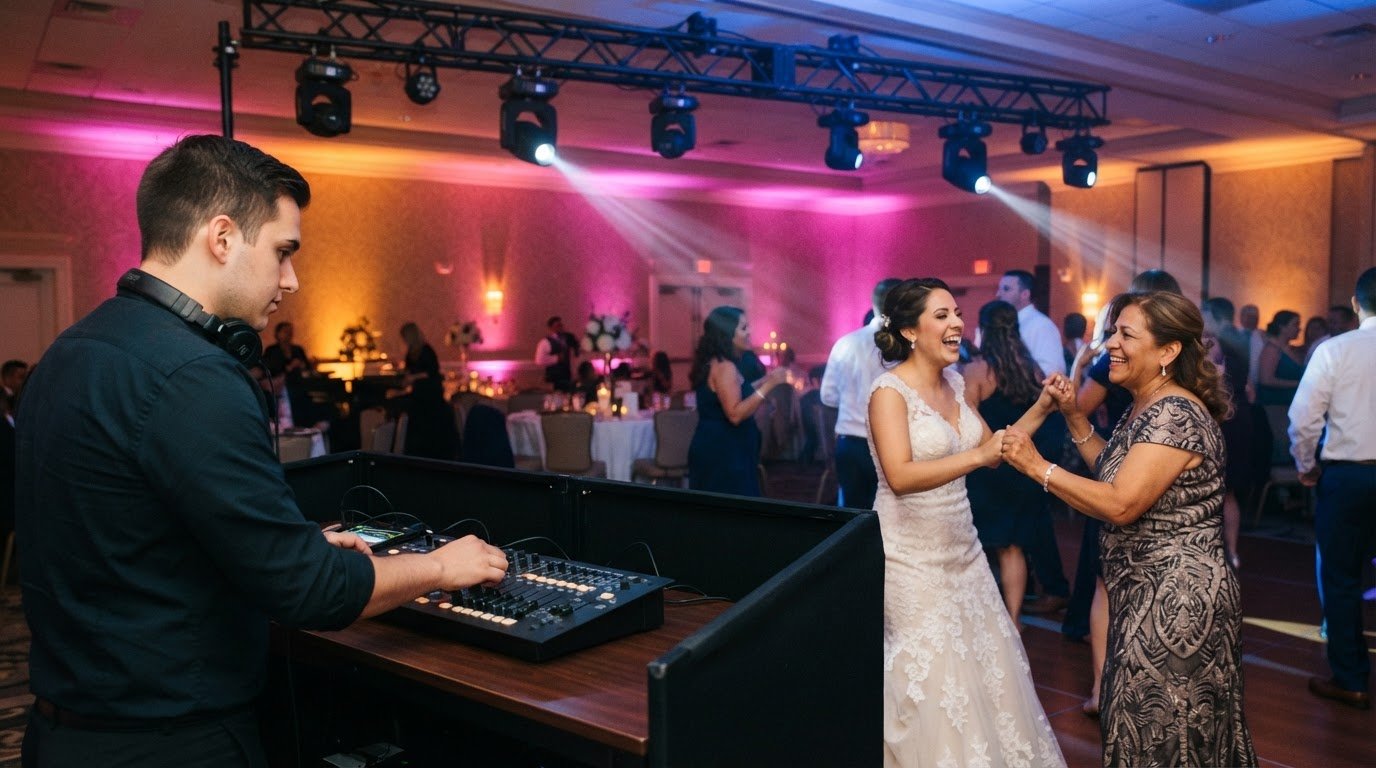
A dance floor feels connected when music synchronized event lighting follows a song’s mood, not just its volume. A lighting professional can shape color, intensity, and movement around the beat, using programmed cues or sound-responsive effects to bring the changes together.
A sudden color shift or burst of movement can lift the room, while constant flashing can distract from the music. Thoughtful timing helps the lighting suit your celebration, guests, and music selection.
Here, you’ll learn how lighting cues can track beats, verses, choruses, and transitions, how color and brightness guide the room’s mood, and what event details help a professional build a coordinated plan for your wedding, Quinceañera, Sweet 16, or corporate gathering, so the dance floor feels connected to the music from the first song to the last.
Key Takeaways
- Use DMX control to coordinate lighting responses with live audio and planned cues.
- Match changes in light to the mood of the music to help shape how the dance floor feels.
- Plan cues around song sections and transitions, not just individual beats.
- Balance color, intensity, and movement so the lights support the music without overwhelming it.
DMX control for lighting synchronization
- Map the lighting system. DMX is a digital communication network standard commonly used to control stage lighting and effects. The technician assigns fixtures to controller channels, then groups them by purpose. For example, dance-floor color, room ambience, and a focused accent can each have distinct cues.
- Choose how cues follow the music. A DMX controller can use live audio input to trigger lighting changes. For repeatable timing, a technician can use timecode software to align cues with a track. The event plan determines whether live response, programmed timing, or a blend best suits the room.
- Build and test the cue sequence. The technician programs lighting changes around the selected music and checks that each fixture responds as planned. A chorus might bring a color shift, while an instrumental break could cue slower movement. Testing with the sound setup helps catch timing mismatches before guests arrive.
- Coordinate strobe use responsibly. Have the lighting professional account for the venue’s safety requirements and event plan when programming strobes. Keep non-flashing cues available, such as steady color changes or gentle movement, so the design does not depend on rapid flashes.
- Understand the published price range. Enhancements and Luxury set-ups can estimate between $2,500 and $5,000. This range is for those set-ups, not a standalone price for music-synchronized lighting. The scope and design of the overall event determine which setup fits.
- Plan for guests with photosensitive epilepsy. Treat rapid flashing as a potential concern for these guests. The lighting professional can plan alternatives, such as steady color or gradual intensity changes, and communicate the approach to the event team.
- Hire for coordination, not just equipment. Look for a professional who can explain DMX control, timecode programming, and how lighting cues will coordinate with the DJ’s music selection. Share your event format, music preferences, and venue details so the plan fits your celebration.
Emotional impact of synchronized sound and lighting
- Set an emotional direction. Ask the lighting professional to shape the room around your celebration’s tone. A wedding’s first dance may call for gentle, steady light, while a high-energy DJ set can build toward bolder color changes. The goal is to support the moment, not compete with it.
- Connect light changes to musical shifts. A chorus, instrumental break, or change in tempo gives the lighting operator a cue to adjust the room’s feel. A gradual color transition during a softer verse can lead into a brighter chorus, helping guests sense the song’s shift without an announcement.
- Choose how the lights follow sound. DMX is a control standard; wireless DMX carries control signals without a wired connection. Sound-activated lights use built-in microphones to pick up audio and trigger responses. The distinction matters: a programmed design follows planned cues, while sound activation reacts to incoming sound.
- Decide whether live response fits. Event lighting can respond to live music and DJ sets in real time when a controller uses live audio input. That can suit party mixing, where songs and transitions shift in the moment. Planned cues offer more deliberate timing for a specific song or event moment.
- Keep sound-activated effects in context. A built-in microphone may react to the beat, but room noise can also affect what it picks up. For a reception, the lighting professional can consider whether an automatic response suits the music and atmosphere, or whether planned control better supports the moment.
- Give each part of the event its own feel. A quiet dinner, a heartfelt toast, and an open dance floor call for different energy. Share the event’s flow and music selection with the lighting professional. If you want lighting coordinated with entertainment, plan your event lighting around the moments that matter most.
Programming cues to musical beats and transitions
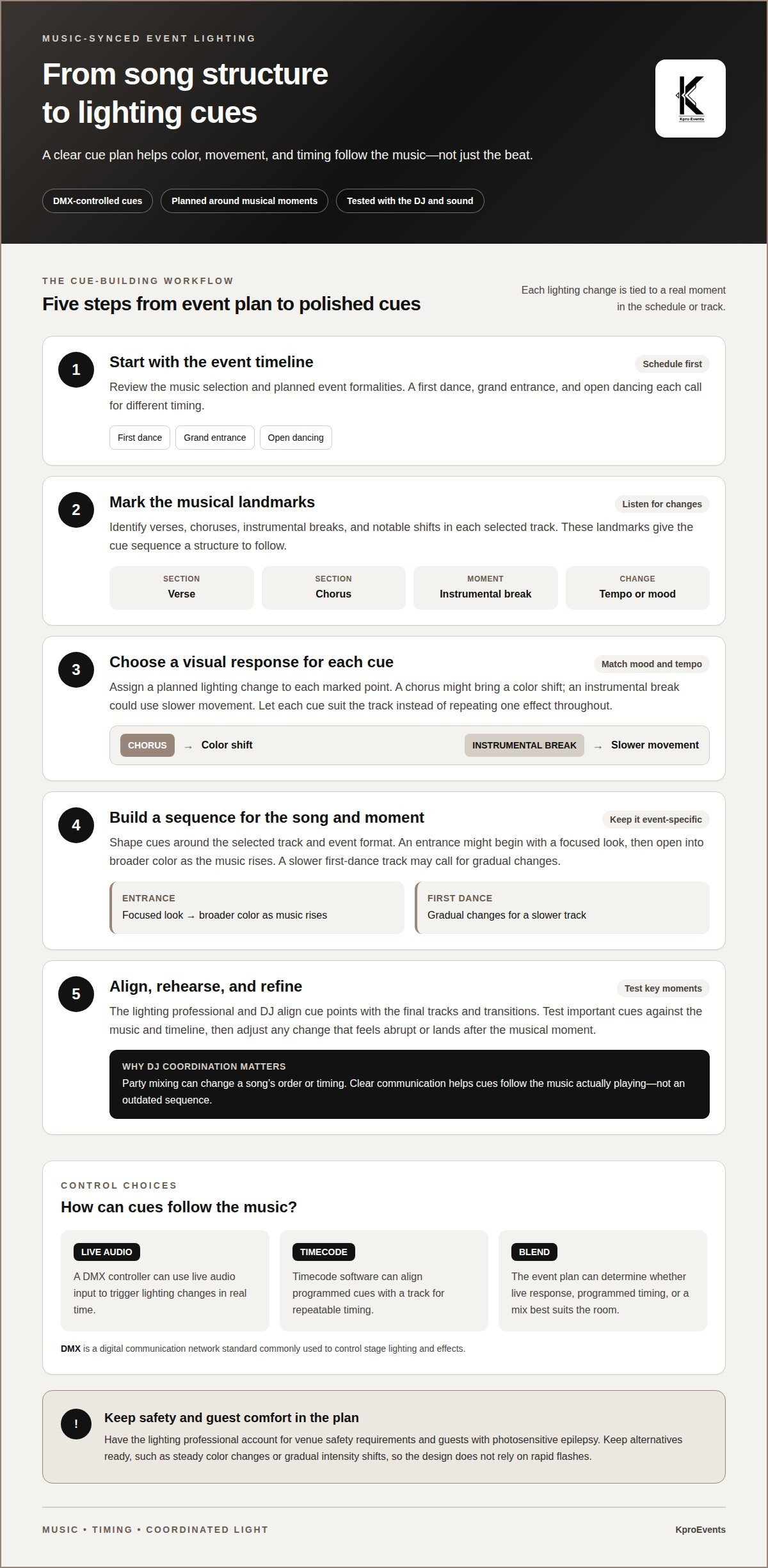
- Start with the event timeline. The lighting professional reviews the music selection and planned formalities before building cues. A first dance, grand entrance, and open dancing each call for different timing. Sharing the schedule helps place lighting changes where they support the moment.
- Mark song sections and transitions. For each selected track, the professional identifies verses, choruses, instrumental breaks, and notable changes. A cue might begin as a verse builds, shift at the chorus, then settle during a softer passage. These musical landmarks create a clear structure for the lighting sequence.
- Choose a visual response for each cue. The professional assigns a planned change to each marked point, such as a color shift at the chorus or slower movement during an instrumental break. Each cue should suit the track’s tempo and mood, rather than repeat one effect throughout the song.
- Build song-specific sequences. For a wedding entrance, a lighting sequence can start with a focused look, then open into broader color as the music rises. A slower first-dance track may call for gradual changes. For a concert, designers can review the setlist and shape cues around each song’s mood and tempo.
- Coordinate cues with the DJ. The lighting professional and DJ align cue points with the final tracks and transitions. This matters when party mixing changes a song’s order or timing. Clear communication helps the operator follow the music actually playing, rather than relying on an outdated sequence.
- Rehearse key moments. The team tests important cues against the selected tracks and event timeline. They can adjust a transition that feels abrupt or a change that arrives after the musical moment. Prioritize entrances, the first dance, and any planned finale for review.
- Prepare for live changes. The professional keeps the cue plan adaptable if the DJ extends a track, moves between songs, or changes the order. A useful plan identifies musical landmarks, so the operator can follow the moment without forcing a fixed sequence onto a changing set.
Coordinating light color, intensity, and movement with music
- Start with the song’s mood. Ask the lighting professional to choose colors that support each musical moment. A soft ballad might call for a gentle color wash, while an upbeat dance track could shift to brighter hues. LED fixtures give designers a broad range of colors, patterns, and brightness levels.
- Shape intensity around the room’s energy. A gradual increase in brightness can build anticipation as a song rises. During a quiet passage, reducing intensity keeps the focus on the music and the people sharing the moment. The right change depends on the song and event atmosphere.
- Match movement to musical pace. Slow sweeps can complement a relaxed track, while quicker movement may suit a lively dance section. A lighting professional can vary movement across the song instead of leaving fixtures in constant motion. That contrast helps each change feel intentional.
- Use sound activation with care. Sound-activated lights use built-in microphones to pick up audio signals and trigger responses. The professional can tune their sensitivity to musical details, so they respond to the track without reacting excessively to crowd sounds or other ambient noise.
- Balance different lighting roles. Spotlights can draw attention to performers or a featured moment, while floodlights and ambient lights create broader effects. For a first dance, a focused spotlight and softer room light can complement each other without filling every surface with movement.
- Preview the design and adjust live. Pre-visualization software can simulate how lighting interacts with music before the event. During the celebration, experienced technicians can make real-time adjustments when a song or transition changes, helping color, intensity, and movement stay in step.
- Connect the plan to your event. Share the mood you want for key moments, from a calm entrance to a lively dance floor. Coordinating music and lighting decisions with your DJ can help the overall experience feel connected. Plan lighting and DJ coordination around your celebration.
KproEvents: Lighting
KproEvents provides lighting for celebrations where you want the room’s look to move with the music. Share the moments you want to emphasize, from a wedding entrance to a Quinceañera dance set, and the team will shape the lighting around your event’s flow and mood.
For a more connected experience, KproEvents also offers DJ and Bilingual MC services and coordination. Coordinating music, hosting, and lighting can help event transitions feel smooth, while the Digital Seating Chart Concierge and Screen Displays support other parts of your guest experience. Every celebration has its own music and priorities, so your plans can start with what matters most to you.
Planning music and lighting for your event? Contact KproEvents to talk through your ideas.
Give Your Celebration a Distinctive Light
Choose a visual feeling that belongs to your celebration, not just a sequence of effects. A signature color, a softer look for meaningful moments, or a brighter dance-floor atmosphere can make the room feel personal. Think about the memories you want guests to carry with them, then let that feeling guide your music synchronized event lighting plan.
KproEvents provides Lighting, alongside DJ and Bilingual MC services and coordination services. Kenny brings 12+ years of deejaying experience to event entertainment, while the Digital Seating Chart Concierge and Screen Displays support other parts of the guest experience. That range can help you plan the atmosphere and event flow around your priorities, whether you’re celebrating a wedding, Quinceañera, Sweet 16, or corporate gathering.
Ready to talk through the look and feel you have in mind? Contact KproEvents to plan your lighting. Your celebration should feel like yours from the first song onward!
Frequently Asked Questions
What equipment does a professional need to sync event lights to music?
A professional typically needs a DMX controller, lighting fixtures, and a way to coordinate cues with the music. For programmed timing, the setup may include timecode software; for live audio response, a controller can use audio input. Sound-activated lights use built-in microphones. The venue layout and lighting design help determine which approach and equipment fit the event.
What software and apps can a professional use for music-synchronized lighting?
Professionals can use timecode software to align lighting cues with specific points in a track, alongside a DMX controller or audio-visual console. For live response, a controller can use audio input instead of a fixed sequence. The right setup depends on whether your event needs precise timing for selected songs or lighting that responds as the music changes.
How do professionals set up and program lights to follow music?
Professionals begin with the venue layout, final music tracks, and event timeline. They plan fixture positions, mark important musical moments, then program and test cues against the chosen tracks. Confirming the final versions matters, especially if a song has an edited entrance or ending. A run-through also lets the team assess how the lighting looks from guest areas.
What are the risks of flashing lights for guests with photosensitive epilepsy?
Rapid flashing may be a concern for guests with photosensitive epilepsy. A lighting professional can use alternatives such as steady color or gradual intensity changes.
